Spring & Houston, TX homeowners guide by Reality Roofing & Construction
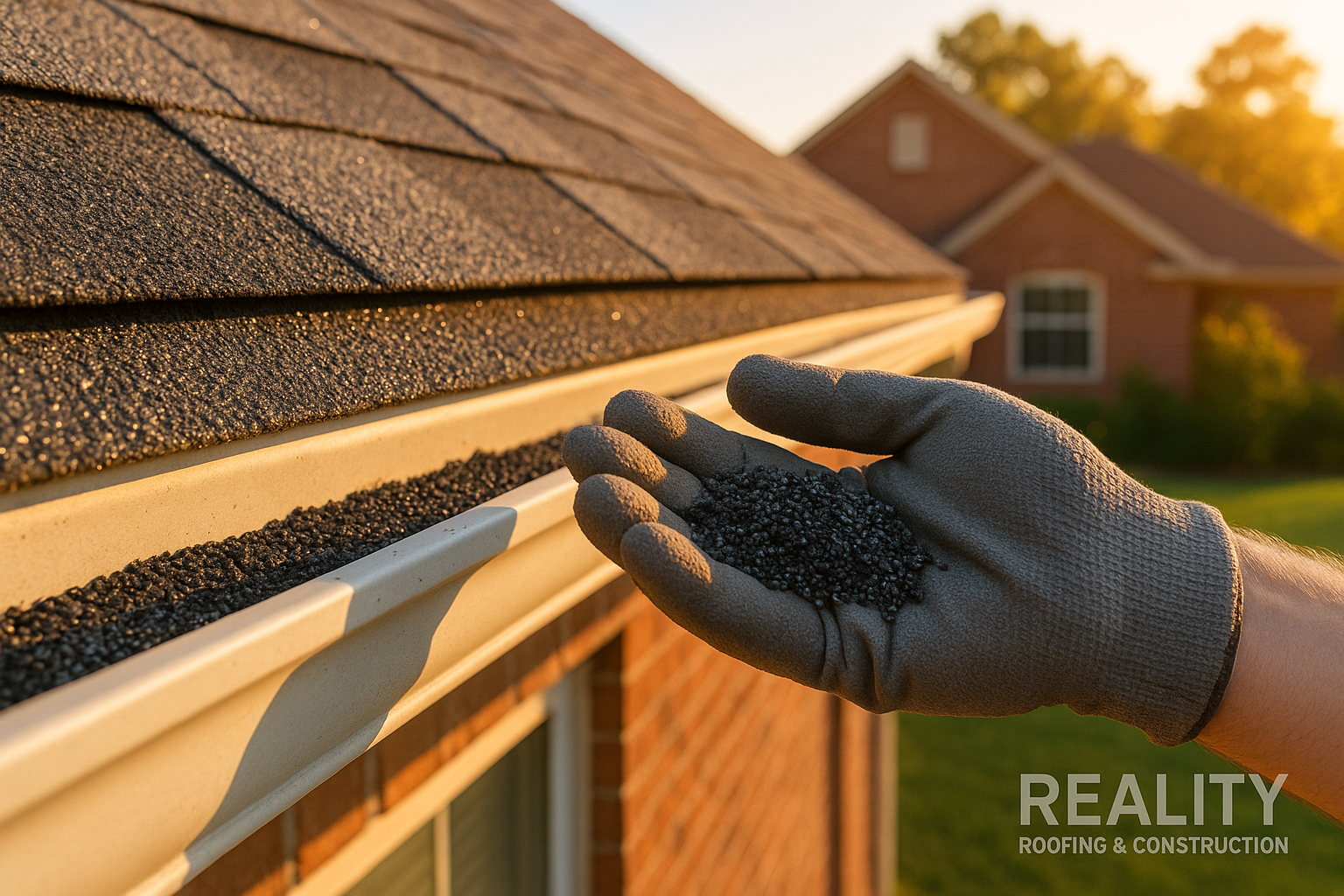
When you clean your gutters in Spring or greater Houston and see dark, sand-like grit, you’re looking at asphalt shingle granules. They protect shingles from UV, add fire resistance, and give your roof its color. Finding some in your gutters isn’t automatically a crisis—but it can be a useful signal about your roof’s condition in our Gulf-Coast climate.
Below we break down what’s normal, what’s not, and exactly what to do next, tailored to Spring, North Houston, and surrounding communities.
What granules do (and why Houston roofs shed them)
- UV shield: Granules block intense sun. Houston’s long, hot summers accelerate UV aging, so granules matter more here than in cooler regions.
- Impact & fire resistance: They help diffuse hail/impact and contribute to Class A fire ratings.
- Color & temperature: Darker blends can run hotter; reflective blends can moderate attic temps a bit.
When granules in the gutters are normal
- New roof “break-in” (first 3–6 months): Shingles often shed excess manufacturing granules. You may see noticeable amounts after the first few rains.
- After heavy storms: A single thunderstorm with wind + sheets of rain can wash loose surface granules without meaning your shingles are failing.
- High-flow spots: Valleys, steep slopes, and downspouts that collect multiple roof planes often show localized build-up.
- Foot traffic or minor maintenance: Walking the roof for holiday lights, satellite installs, or chimney work can loosen some granules.
- Normal aging on older roofs: Small, periodic amounts are expected as shingles slowly wear—especially past year 12–15 depending on shingle type and ventilation.
Rule of thumb: If you can scoop a handful from one cleaning and it doesn’t keep recurring, you’re likely fine. Monitor—don’t panic.
When granules in the gutters are a red flag
- Bald spots you can see from the ground: Shiny black asphalt exposed, or color “balding” in patches—often on sun-baked south/west slopes in Houston.
- Hail or blistering patterns: Circular divots, random pitting, or clusters of granules knocked off after a storm.
- Consistent, large build-ups each rain: If you’re emptying cups of granules after multiple rains, that suggests accelerated wear.
- Edges, valleys, and around penetrations eroding: Granule loss at critical details (rakes, valleys, skylights, pipe boots) raises leak risk.
- Curling, cracking, or brittle tabs: Granule loss + shingle deformation points to end-of-life or ventilation issues.
- Recent solar or other installs: Improperly flashed or walked-on shingles can lose granules in tracks around mounts or conduits.
If you’re seeing any of the above—especially after a named storm or hail cell—document it and call a pro.
Quick homeowner check (no ladder required)
- Downspout check: Place a light-colored container under your downspout during the next rain. A tablespoon or two isn’t alarming; repeated large amounts are.
- Ground scan: From the sidewalk, look for dull, dark patches (balding) and inconsistent color between slopes.
- Attic peek: After heavy rain, look for stains, wet decking, or musty odor.
- Gutter clean photo: Take a photo of the granules you remove each season to compare over time.
Insurance notes for Spring & North Houston
Insurers look for functional damage, not just cosmetic color change. If a storm knocked off granules and left:
- Bruised mat, exposed asphalt, or reduced remaining life,
you may have a valid claim. Take date-stamped photos and keep storm reports if possible. Reality Roofing & Construction can provide third-party style documentation (scope notes, photos, and a repairability opinion) you can share with your adjuster.
What to do (and what not to do)
Do:
- Keep gutters clear so granules don’t trap moisture against fascia.
- Schedule a free inspection if you see recurring piles or visible balding—ask for valleys, penetrations, ridge caps, and south/west slopes to be photographed.
- Verify attic ventilation (intake + exhaust). Poor airflow accelerates granule loss.
Don’t:
- Try to glue or sprinkle granules back on—repairs focus on sealing, replacing shingles, or addressing the underlying cause.
- Pressure-wash shingles—this strips granules.
- Delay on detail repairs (pipe boots, flashing). Small fixes prevent bigger granule loss.
How Reality Roofing & Construction helps
- Granule trend report: We photograph key slopes/valleys and note any change over time—useful for both maintenance and insurance.
- Thermal & moisture checks: If we suspect underlayment or decking concerns, we can spot-check with moisture meters.
- Honest recommendations: Sometimes we decline a replacement when the roof is healthy; sometimes we recommend a targeted repair to extend life.
- Local expertise: Our crews work across Spring, North Houston, and surrounding communities, so we know how Gulf storms and heat age shingles here.
Need eyes on your roof? Ask for Ramiro’s inspection team—clear photos, plain-English findings, and options that fit your timeline and budget.
FAQs: Granules in Gutters (Spring & Houston, TX)
Q1. How much granule loss is “too much”?
A steady handful or more after multiple rains, plus any visible bald spots or pitting, is worth a pro inspection.
Q2. Will insurance cover granule loss after a storm?
If loss is tied to functional hail/wind damage (bruising, exposed asphalt, reduced service life), possibly. Cosmetic color change alone is usually not covered.
Q3. Can granules be replaced without re-roofing?
Not directly. The real fix is repairing or replacing affected shingles and addressing the cause (impact, age, ventilation, or installation issues).
Q4. Do gutter guards stop granule loss?
They don’t stop the loss itself, but they keep gutters flowing so water doesn’t back up. Choose guards compatible with your shingle warranty and local debris load.
Q5. My roof is under 5 years old and I see granules. Is that bad?
Early shedding can be normal—especially after first storms. If shedding continues or you see balding/pitting, get it checked.
Q6. How long do asphalt shingles last in Houston’s climate?
Ventilated, quality architectural shingles often reach 18–25 years here; poor ventilation, dark color on full-sun slopes, or frequent storms can shorten that.
Call to action (Spring & Houston) If you’re in Spring, TX or North Houston, we can usually get you a same-week inspection. You’ll get photo documentation and a clear plan: monitor, repair, or replace.
Reality Roofing & Construction — friendly, transparent, local.