Skip to content
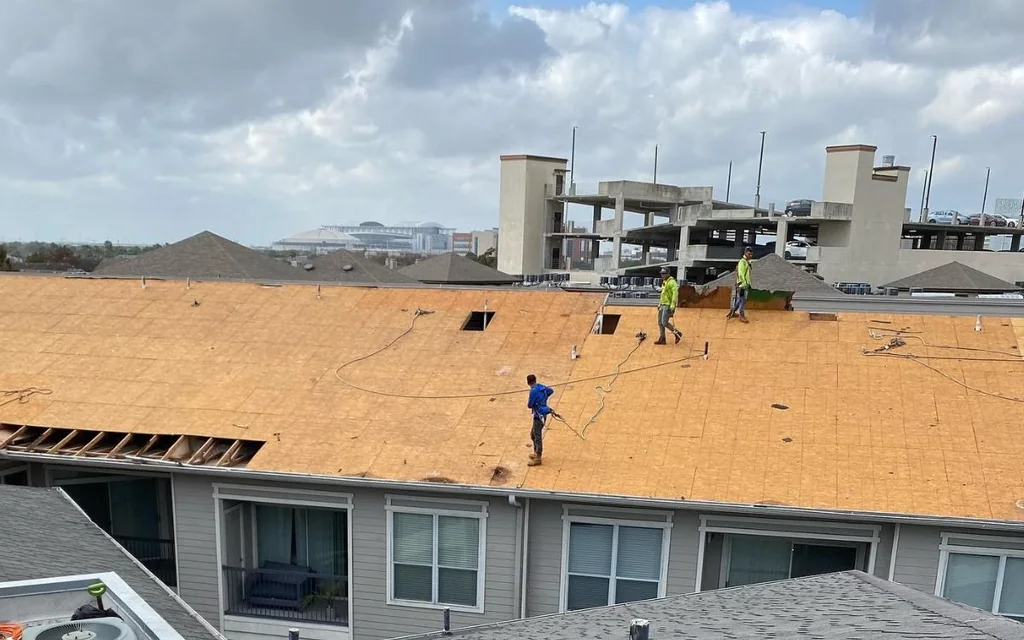
Roof decking work on a multifamily building

Reality Roofing & Construction

Commercial Roofing
in the Houston Area.

Inspections, leak repair, replacement and installation for commercial properties. Explore TPO, metal and sloped-roof options with a plan shaped around your building.

Houston • Spring • Kingwood • Porter • The Woodlands

A closer look at a low-slope roof

A large roof.
Small details that matter.

The field of the roof is only part of the story. Equipment, transitions and drainage create connections that should be considered alongside the membrane itself.

Three commercial roof details that deserve attentionConceptual low-slope building. Number one marks membrane seams, two marks rooftop equipment and penetrations, and three marks the drainage edge. Not a construction specification. 010203THE ROOF IS A CONNECTED SYSTEM
Conceptual commercial roof illustration. Actual assemblies, equipment and drainage layouts vary by property.
01Surface & seams

Membrane condition, seams and prior patches help reveal where wear is concentrated. The visible surface alone cannot confirm the condition of insulation or decking underneath.

02Equipment & penetrations

HVAC curbs, pipes and wall transitions interrupt the roof covering. Flashing condition and the way these details connect deserve attention when tracing a leak.

03Drainage & edges

Look at how water reaches drains, scuppers and gutters. Debris, damaged edges and areas where water remains can change the repair or replacement plan.

Seeing new leaks after wind or hail? Start with the changed conditions.

Storm damage guidance

Commercial roofing systems

Choose the assembly.
Not just the surface.

Slope, drainage, existing materials and how the building is used all affect system selection. The proposed roof should be evaluated as a complete assembly.

TPO for commercial low-slope roofs

Thermoplastic polyolefin is a single-ply roofing membrane with heat-welded seams. Reality Roofing offers TPO installation, replacement, repair and inspections for Houston-area properties.

The membrane, attachment method, insulation and flashing must work together. Product selection and existing roof conditions determine the proposed approach; no single performance or warranty promise fits every building.

Explore TPO roofing

Metal roofing

For appropriate roof slopes and building designs, discuss metal panels, attachment, transitions and replacement of worn components.

Metal roofing options

Shingles for sloped roofs

Multifamily and other commercial buildings can have steep-slope roof sections. Shingle selection should account for pitch, ventilation, flashing and the existing assembly.

Asphalt shingle roofing

Coatings, where suitable

A coating is not a substitute for repairing a failing roof. Ask whether the existing surface, moisture condition, drainage and product compatibility make a coating appropriate.

Roofing an occupied property

The building has
a day job, too.

Tenants, staff, deliveries and customers all need to be part of the planning conversation. Identify the constraints early so the proposed scope accounts for more than the roof area.

Confirm access, work hours and any restricted areas before work starts. Night or weekend work and uninterrupted operations are not assumed.

  • Access & stagingDiscuss roof access, parking, material deliveries, loading areas and debris removal.
  • People & spacesIdentify entrances, tenant-sensitive areas and routes that need protection or temporary restrictions.
  • Noise & equipmentFlag sensitive operations, rooftop equipment and coordination with your maintenance contacts.
  • CommunicationAgree on a site contact, occupant notices and how schedule or scope changes will be communicated.

From assessment to project planning

Make the next decision
with a clearer scope.

An estimate should help you compare the proposed work, not just the bottom line. Use these checkpoints to keep the conversation specific to your property.

01

Share the history

Provide the address, roof concerns, prior repairs, access restrictions and any available roof records.

02

Assess the condition

Review visible conditions and discuss whether further investigation is needed before the scope can be defined.

03

Review the estimate

Clarify materials, preparation, exclusions, timing, payment terms and the process for unexpected conditions.

04

Agree on closeout

Confirm cleanup, final review, any applicable written warranty terms and maintenance information.

A customer's perspective

Clear communication
makes a difference.

“They were professional, reliable, and responsive throughout the duration of my roof replacement.”

Taj Kasem · Google review excerpt

Feedback from a residential customer, shared for their experience with the team. It is not a commercial project case study or a promise of a particular outcome.

Before you commit

Commercial roofing
questions, answered.

Can a leaking commercial roof be repaired instead of replaced?

Sometimes. An isolated seam, flashing or penetration problem may be repairable when the surrounding roof is sound. Recurring leaks, widespread deterioration or wet underlying materials may call for a broader scope. The roof condition should guide the decision, not age alone.

Is TPO the right choice for every flat roof?

No. TPO is a single-ply membrane used on many low-slope buildings, but suitability depends on the deck, drainage, insulation, attachment requirements and rooftop use. Existing conditions and the proposed assembly need to be evaluated together.

What affects the cost of a commercial roofing project?

Roof area, access, tear-off, material selection, insulation, flashing and deck repairs all affect pricing. Request a property-specific written estimate that identifies the scope, exclusions and how concealed damage or changes will be priced.

Can the building stay open during roofing work?

That depends on the work and how the property is used. Discuss entrances, deliveries, noise, equipment, ventilation and areas that may need to be restricted. Confirm the agreed schedule and occupant notifications before work begins; uninterrupted operations cannot be assumed.

Can a new membrane be installed over the existing roof?

Not every roof is suitable for a recover. Moisture, existing layers, attachment, drainage, deck condition and applicable requirements affect the decision. An assessment should determine whether removal or another approach is appropriate.

What should I have ready for an assessment?

Share the property address, your contact details, known roof type, leak locations and any available repair or warranty records. Note roof-access arrangements, tenant concerns and time-sensitive issues. Do not climb onto the roof to gather information.

What warranty applies, and how long will the work take?

Both are project-specific. Ask for any applicable manufacturer and workmanship terms in writing, including coverage, exclusions and maintenance obligations. Timing depends on scope, materials, weather, access and site conditions; confirm it with the proposal.

What happens if the damage may be insurance-related?

Start with an assessment of the roof and discuss the repair scope and available documentation. Your insurer determines coverage and claim payments under your policy. A roofing estimate does not establish a settlement or guarantee claim approval.

Let's talk about your property

Start with a roof assessment.
Build a practical plan.

Tell Reality Roofing where the property is and what you are seeing. Request a free roof assessment or discuss an estimate for repair, replacement or installation.

(713) 294-3404

Serving Houston, Spring, Kingwood, Porter and The Woodlands. Contact us to confirm service and access arrangements for your address.

Other contact options

Required fields are marked *. This is an appointment request, not a confirmed visit. Please do not include confidential tenant or payment information.