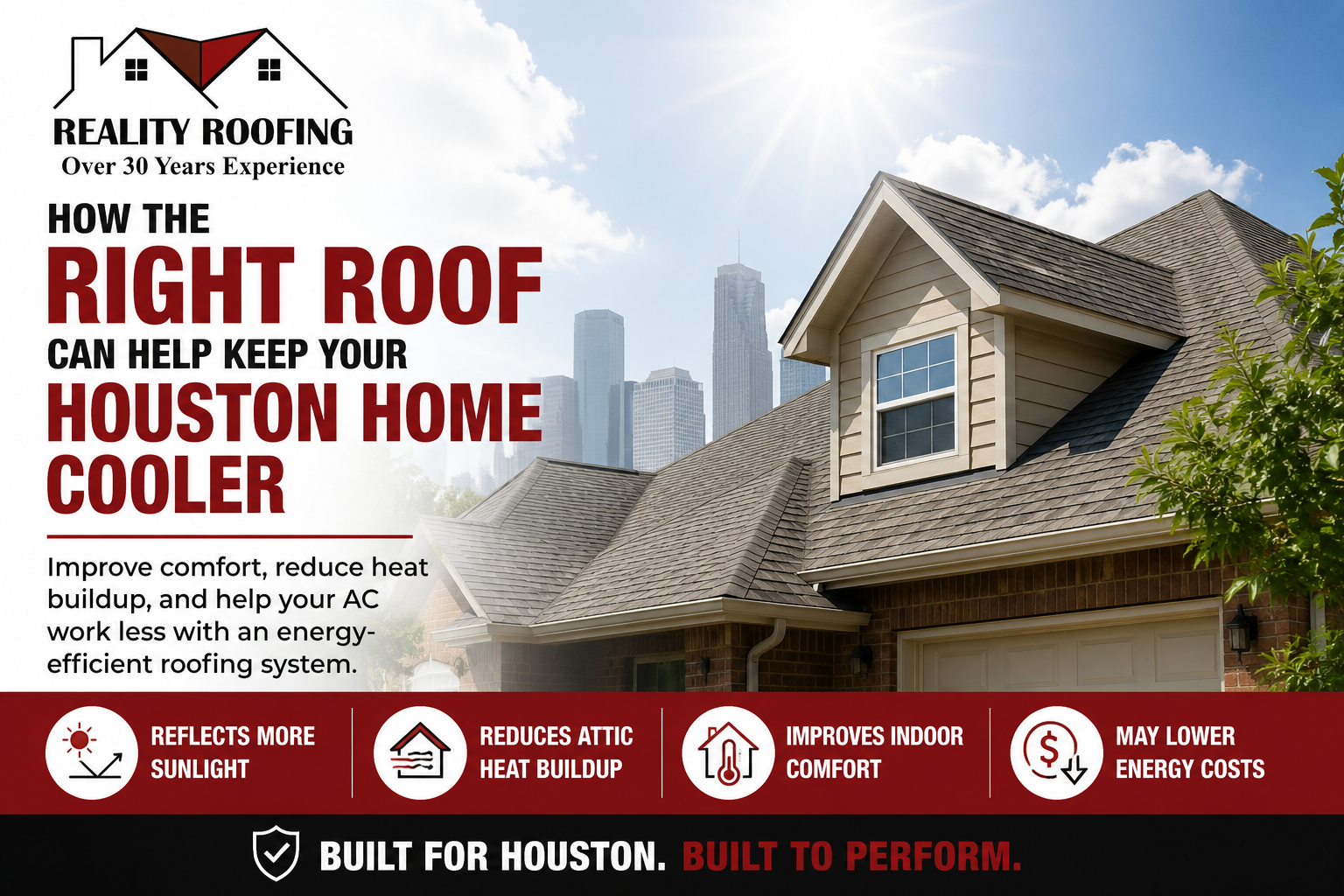
Houston homeowners know what extreme heat feels like. During the hottest months of the year, your air conditioning system may seem like it's running constantly just to keep your home comfortable.
But your AC isn't the only part of your home affecting indoor temperatures.
Your roof plays an important role in how much heat enters your home. The roofing material, color, reflectivity, ventilation, insulation, and overall condition of the roofing system can all influence how your home handles Houston's intense sun and heat.
If you're planning a roof replacement, choosing an energy-efficient roofing system can help reduce heat transfer into the attic, improve indoor comfort, and potentially reduce the workload placed on your cooling system.
Here's what Houston homeowners should know.
Your roof receives direct sunlight for hours every day. Roofing materials absorb some of that solar energy and convert it into heat.
That heat can then transfer through the roofing system and into the attic.
In a climate like Houston's—where high temperatures, strong sunlight, and humidity can persist for months—heat buildup in the attic can make it more difficult to keep the living areas below comfortable.
Your air conditioner then has to work against that additional heat.
That's why energy-efficient roofing isn't simply about choosing a certain type of shingle. It's about creating a roofing system that manages heat effectively.
Energy-efficient roofing is designed to reduce the amount of heat transferred from the roof into the home.
Depending on the roofing system, this can involve materials that reflect more sunlight, release absorbed heat more efficiently, or work with proper attic ventilation and insulation to reduce heat buildup.
For Houston homeowners, an energy-efficient roof may include:
These components work together to help manage the extreme temperatures common in Southeast Texas.
Roof color can influence how much solar energy a roofing surface absorbs.
Traditionally, lighter-colored roofing materials tend to reflect more sunlight than darker materials. However, modern roofing technology has made color only part of the equation.
Some manufacturers now produce roofing materials with specially designed reflective granules or coatings that improve solar reflectance while still giving homeowners a wide range of color choices.
That means you don't necessarily need a white roof to improve energy efficiency.
When selecting a new roofing material, homeowners can ask their roofing contractor about the product's solar reflectance and whether energy-efficient or cool-roof options are available.
Yes.
Asphalt shingles remain one of the most popular residential roofing materials in Houston, and manufacturers offer options designed to reflect more solar energy than traditional shingles.
Some shingles incorporate reflective granules that reduce the amount of heat absorbed by the roofing surface.
For homeowners who prefer the appearance and affordability of asphalt shingles, energy-efficient options can provide a practical balance between performance, appearance, and cost.
However, the shingles are only one part of the system.
Even high-quality roofing materials won't perform as intended if the roof has inadequate ventilation or other installation problems.
Metal roofing can be an excellent option for Houston homes when properly designed and installed.
Many metal roofing systems reflect a significant portion of solar radiation rather than absorbing it. Certain finishes and coatings can further improve their ability to reflect sunlight and release absorbed heat.
Metal roofing also offers durability that can be attractive to homeowners dealing with Houston's demanding weather conditions.
However, homeowners shouldn't choose a roof based solely on the material.
Installation quality, ventilation, insulation, roof design, coating, color, and other factors all influence the overall performance of a metal roofing system.
One of the most overlooked parts of an energy-efficient roofing system is attic ventilation.
As heat builds underneath the roof, a properly designed ventilation system helps move hot air out of the attic while allowing fresh air to enter.
Without adequate ventilation, extremely hot air can become trapped in the attic.
That can contribute to higher attic temperatures, increased strain on the cooling system, moisture problems, and premature deterioration of certain roofing components.
A balanced ventilation system typically uses intake and exhaust vents designed to work together.
When replacing a roof, the existing ventilation system should be evaluated rather than automatically assuming that what's already there is sufficient.
Your roof and attic work together.
While roofing materials help manage heat at the exterior of the home, attic insulation helps slow heat transfer into the conditioned living space below.
If insulation is inadequate, compressed, damaged, or missing in certain areas, your home may gain more heat regardless of how well the roof performs.
That's why homeowners interested in improving energy efficiency should consider the entire roof-and-attic system instead of focusing exclusively on shingles.
A radiant barrier is another option sometimes used in hot climates.
Radiant barriers are installed in attic spaces to help reduce radiant heat transfer from the underside of the roof toward the living areas of the home.
They're not a replacement for insulation or proper roof ventilation. Instead, they're another component that may help improve the overall thermal performance of the attic.
Whether a radiant barrier makes sense depends on the home's construction, existing insulation, attic configuration, and other factors.
An older roof doesn't automatically mean your home will be hotter, but the condition and design of an aging roofing system can contribute to poor energy performance.
Older roofs may have:
If your roof is already approaching the end of its useful life, energy efficiency is one factor worth considering when choosing the replacement system.
A roof replacement gives homeowners an opportunity to evaluate more than the shingles. Ventilation, flashing, underlayment, insulation conditions, and roofing materials can all be considered together.
A properly designed roofing system may help reduce the amount of heat entering your home, which can reduce cooling demand.
However, homeowners should be cautious of anyone promising a specific reduction in electricity bills simply from replacing the roof.
Energy consumption depends on many factors, including:
The more realistic goal is to create a roofing and attic system that helps your home manage Houston's heat more effectively.
That can contribute to better indoor comfort and may reduce unnecessary strain on your cooling system.
If you're considering a roof replacement, don't choose a roofing material based solely on appearance or price.
Ask your roofing contractor about:
The goal should be to select a roofing system that fits your home, your budget, and Houston's climate.
Even premium roofing materials can't compensate for poor installation.
Incorrect flashing, inadequate ventilation, improper fastening, damaged decking, or shortcuts during installation can affect the performance and lifespan of the entire roofing system.
That's why choosing the right roofing contractor is just as important as choosing the roofing material.
A professional roofing contractor should evaluate your existing roof, explain the available options, and recommend a system appropriate for your home rather than simply selling the most expensive product.
There isn't one roofing material that's best for every Houston home. Reflective asphalt shingles and metal roofing can both be good options. The home's design, budget, ventilation, insulation, roof pitch, and installation quality should all be considered.
Lighter roofing materials often reflect more solar energy than darker materials, but color isn't the only factor. Modern roofing products may use reflective granules or coatings to improve solar reflectance across a variety of colors.
Houston's hot climate makes heat management an important consideration when choosing roofing materials. Reflective roofing products can reduce roof surface temperatures and the amount of heat transferred toward the building.
It can contribute to improved thermal performance, particularly when an older roofing system is replaced with reflective materials and proper ventilation. However, insulation, HVAC performance, windows, air leakage, and other factors also affect indoor temperature.
Proper ventilation helps remove heat and moisture from the attic. It works alongside roofing materials and insulation as part of the overall roof-and-attic system.
Metal roofing can provide strong solar-reflective performance, particularly with appropriate coatings and finishes. Energy-efficient asphalt shingles are also available, so homeowners should compare the complete roofing systems rather than the material alone.
Usually, energy efficiency alone isn't a reason to replace a roof that's still in good condition. But if your roof already needs replacement because of age, deterioration, leaks, or storm damage, it's a good opportunity to consider energy-efficient roofing options.
Your roof does much more than keep rain out of your home. It's part of the system that protects your property from Houston's heat, humidity, storms, and changing weather conditions.
If your roof is aging, damaged, or due for replacement, Reality Roofing & Construction can evaluate your existing roofing system and help you understand your options.
Our team provides professional roof inspections, roof repairs, and roof replacement services for Houston-area homeowners.
If you're considering a new roof, contact Reality Roofing & Construction to schedule an inspection and discuss roofing options designed for your home and Houston's demanding climate.