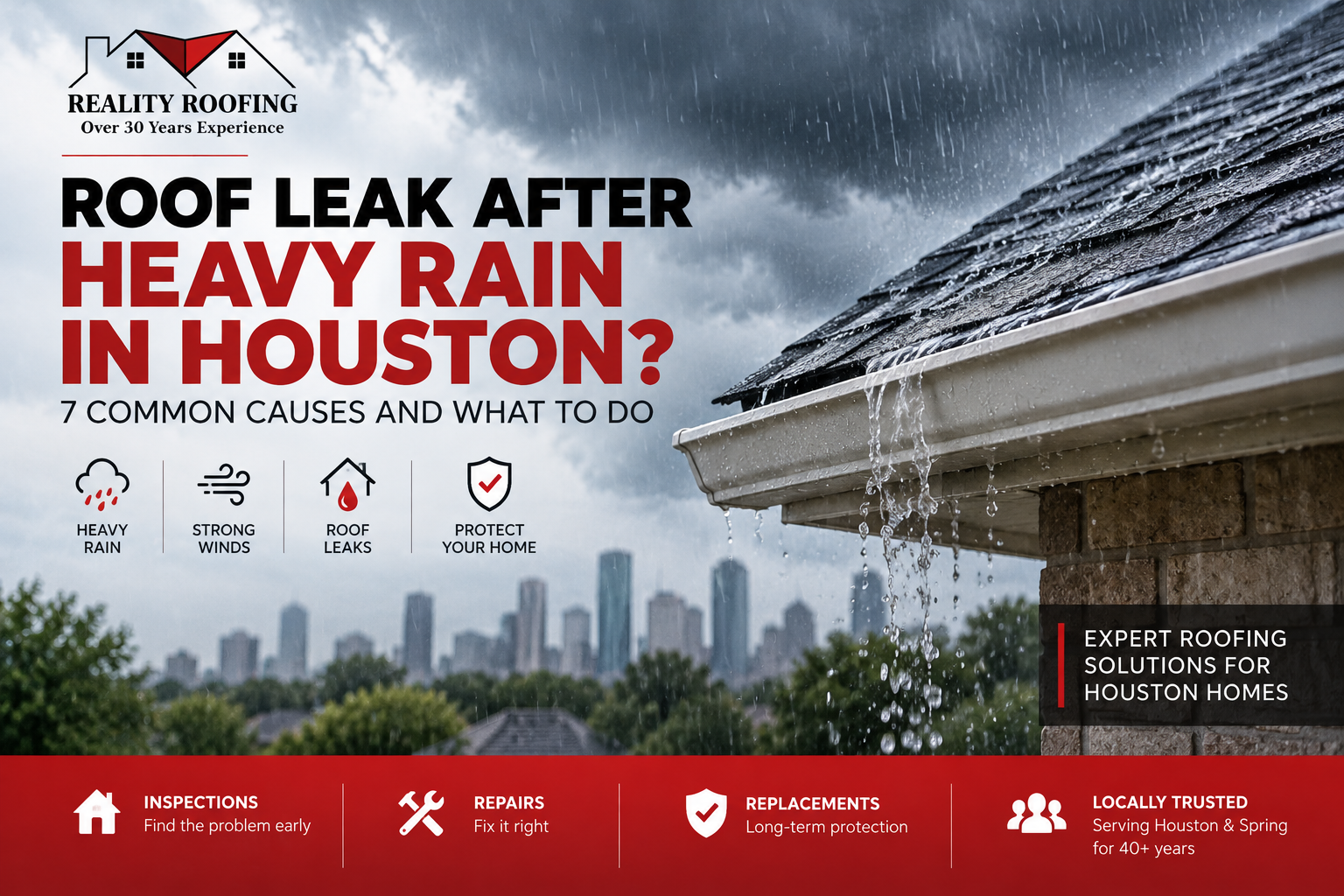
Houston is no stranger to heavy rain. When a strong storm moves through Southeast Texas, homeowners may suddenly notice water stains on the ceiling, dripping near a wall, moisture in the attic, or other signs that their roof is leaking.
A roof leak after heavy rain in Houston doesn't always mean you need a new roof. In many cases, the problem comes from damaged shingles, deteriorated flashing, failed pipe boots, clogged drainage areas, or wind-driven rain entering through a vulnerable part of the roofing system.
What matters is finding the source quickly.
Even a relatively small roof leak can allow moisture into insulation, decking, drywall, and other parts of your home. If you've noticed water entering your home during or after a Houston rainstorm, here's what could be causing it—and what you should do next.
One of the most confusing situations for homeowners is a roof that appears perfectly fine during normal weather but leaks during a major storm.
This often happens because heavy rain and strong winds expose weaknesses that lighter rainfall doesn't.
During a Houston thunderstorm, wind can push rain sideways and underneath roofing materials. Large amounts of water can also overwhelm gutters and drainage areas. If your roof already has a small opening, deteriorated seal, damaged flashing, or aging roofing material, a severe storm may be enough for water to find its way inside.
The location where you see water inside your home isn't necessarily where the roof is leaking, either. Water can enter through one section of the roof and travel along the roof decking, rafters, pipes, or other materials before finally appearing on a ceiling or wall.
That's one reason finding the source of a roof leak can be more complicated than simply looking directly above the water stain.
Shingles are your roof's first line of defense against Houston's rain, wind, heat, and storms.
Strong winds can lift shingles, loosen them, crack them, or remove them entirely. Shingles can also deteriorate over time from prolonged exposure to Texas heat and sunlight.
Once a shingle is damaged, water may reach the roofing materials underneath.
Signs of shingle damage can include:
Some damage is difficult to see from the ground, so a roof can appear intact while still having vulnerable areas.
Flashing is installed around vulnerable areas of the roof to direct water away from joints and openings.
You'll commonly find flashing around chimneys, skylights, roof-to-wall intersections, valleys, and other transitions.
If flashing becomes loose, corroded, improperly sealed, or damaged during a storm, water can enter around these areas.
Flashing problems are particularly important because the roofing material itself may still be in good condition. In that situation, repairing the flashing may solve the leak without requiring a much larger roof repair.
Your roof contains several penetrations for plumbing vents, exhaust vents, and other systems.
These areas are typically sealed with flashing, boots, or other waterproofing materials. Over time, Houston's heat can cause rubber seals and roofing materials around these penetrations to crack or deteriorate.
When heavy rain arrives, water can enter around the opening.
A leak near a bathroom, kitchen, or plumbing wall doesn't necessarily mean there's a plumbing problem. Sometimes the water is entering through the roof around a vent pipe and traveling downward.
A professional roof inspection can help determine whether the problem is coming from the roofing system or somewhere else.
Your gutters play an important role in moving rainwater away from your roof and home.
During heavy Houston storms, an enormous amount of water can move across a roof in a short period of time.
If gutters or downspouts are clogged with leaves, branches, roofing granules, or other debris, water may back up rather than drain properly.
Poor drainage can contribute to water intrusion around roof edges, fascia, soffits, and other vulnerable areas.
Homeowners should periodically check their gutters and downspouts, particularly before and after severe storm seasons.
However, avoid climbing onto a wet or storm-damaged roof yourself. Wet roofing surfaces can be extremely slippery, and storm damage may make portions of a roof unsafe.
Sometimes the issue isn't simply how much rain is falling—it's how the rain is hitting your house.
Houston thunderstorms can produce strong winds that drive rain horizontally instead of allowing it to fall straight down.
Wind-driven rain can expose vulnerabilities around roof edges, flashing, vents, siding transitions, windows, and other exterior openings.
This explains why some homeowners notice leaks only when storms arrive from a particular direction.
If your home leaks during certain storms but remains dry during ordinary rainfall, wind-driven rain should be considered as a possible factor.
The shingles you see from outside aren't the only layer protecting your house.
Roofing systems typically contain underlayment beneath the primary roofing material. This provides an additional layer of protection against moisture.
As a roof ages, materials can deteriorate. A small failure in the exterior roofing material may become more significant if the protective layers underneath have also deteriorated.
Older roofs may therefore begin experiencing leaks during heavy rainfall even when there hasn't been an obvious catastrophic failure.
This doesn't automatically mean the entire roof needs replacement. The extent of the damage, age of the roof, condition of surrounding materials, and number of problem areas should all be evaluated before determining whether roof repair or roof replacement makes more sense.
One of the biggest mistakes homeowners can make after a severe storm is assuming their roof wasn't damaged simply because they can't see anything wrong.
Not every roofing problem is obvious.
Wind can lift or loosen roofing materials without completely removing them. Hail can damage shingles and other roofing components. Flashing can shift. Sealants can fail. Small openings can develop around penetrations.
You may not discover the problem until the next heavy rainfall sends water through the damaged area.
If a major storm recently moved through your area and your roof suddenly begins leaking, storm damage should be investigated even if the roof looks normal from your yard.
Your first priority should be limiting damage inside the home.
If water is dripping from the ceiling, place a container underneath the leak and move furniture, electronics, rugs, and other belongings away from the affected area when it is safe to do so.
Do not climb onto your roof during a storm.
Once conditions are safe, document what happened. Take pictures or video of visible water intrusion, ceiling stains, damaged belongings, or other evidence of the leak.
Then arrange for a professional roof inspection.
Finding the actual entry point is important because patching the area where water appears inside the house may not address the source of the problem.
A leaking roof does not automatically mean you need a new roof.
Many roof leaks can be repaired when the problem is isolated.
For example, a repair may be appropriate when the problem involves a small area of damaged shingles, failed flashing, a deteriorated pipe boot, or another localized issue and the rest of the roofing system remains in good condition.
Roof replacement may become a better option when there is widespread deterioration, extensive storm damage, repeated leaks in different areas, significant decking damage, or an older roofing system nearing the end of its useful life.
The right decision should be based on the actual condition of the roof—not simply the fact that a leak exists.
A small water stain may not look urgent, especially if it stops growing once the storm passes.
But the visible stain may represent only part of the moisture entering your home.
Water intrusion can potentially affect:
Persistent moisture can also create conditions that allow mold or mildew to develop.
Addressing the source early can help prevent a relatively manageable roof repair in Houston from becoming a larger problem later.
Houston roofs face a difficult combination of weather conditions.
Extreme heat, intense sunlight, high humidity, thunderstorms, strong winds, hail, and heavy rainfall can all contribute to roofing wear over time.
Temperature changes can also cause roofing materials to expand and contract repeatedly, while prolonged UV exposure can accelerate deterioration of certain components.
That's why roof maintenance shouldn't only happen after water starts coming through the ceiling.
Periodic inspections can help identify deteriorated flashing, damaged shingles, failed seals, drainage problems, and other vulnerabilities before the next major Houston storm exposes them.
Consider scheduling an inspection if you notice:
You should also consider having the roof inspected after a significant storm even if you haven't discovered an interior leak yet, particularly if you suspect the property experienced hail or strong winds.
Heavy rain can expose small vulnerabilities that don't allow enough water inside during lighter rainfall. Wind-driven rain, overwhelmed drainage areas, deteriorated flashing, damaged shingles, and failed seals are all possible causes.
Yes. Strong winds can push rain underneath or around vulnerable roofing components. This is one reason a house may leak during storms coming from one direction but remain dry during ordinary rainfall.
It depends on the severity of the leak. Active water intrusion, sagging ceilings, significant interior damage, or water near electrical systems should be treated seriously. Avoid entering unsafe areas and contact an appropriate professional as soon as possible.
No. Many roof leaks can be repaired. Whether repair or replacement is appropriate depends on the cause of the leak, extent of damage, condition and age of the roof, and whether problems are isolated or widespread.
A roofer typically examines the exterior roofing system as well as areas around flashing, vents, valleys, penetrations, shingles, and other potential entry points. Attic evidence may also help trace the path water traveled after entering the roofing system.
You can safely look for visible damage from the ground, but climbing onto a wet or potentially damaged roof can be dangerous. A professional inspection is the safer option when roof-level evaluation is necessary.
If your roof started leaking after heavy rain, waiting for the next storm to see whether it happens again isn't the best strategy.
The source may be something relatively minor and repairable—or the leak could be an early warning sign of more extensive roofing damage.
Reality Roofing & Construction provides professional roof inspections and roof repair services for homeowners in Houston and surrounding communities. Our team can evaluate the roofing system, identify the likely source of water intrusion, and explain whether a targeted repair or more extensive work is appropriate.
If you've discovered a roof leak after a Houston storm, contact Reality Roofing & Construction to schedule a roof inspection and get the problem evaluated before the next heavy rain.